Acronis Cyber Protect for MSPs Honest Assessment
Native integration across backup, security, and RMM cuts operational overhead for lean MSP teams.

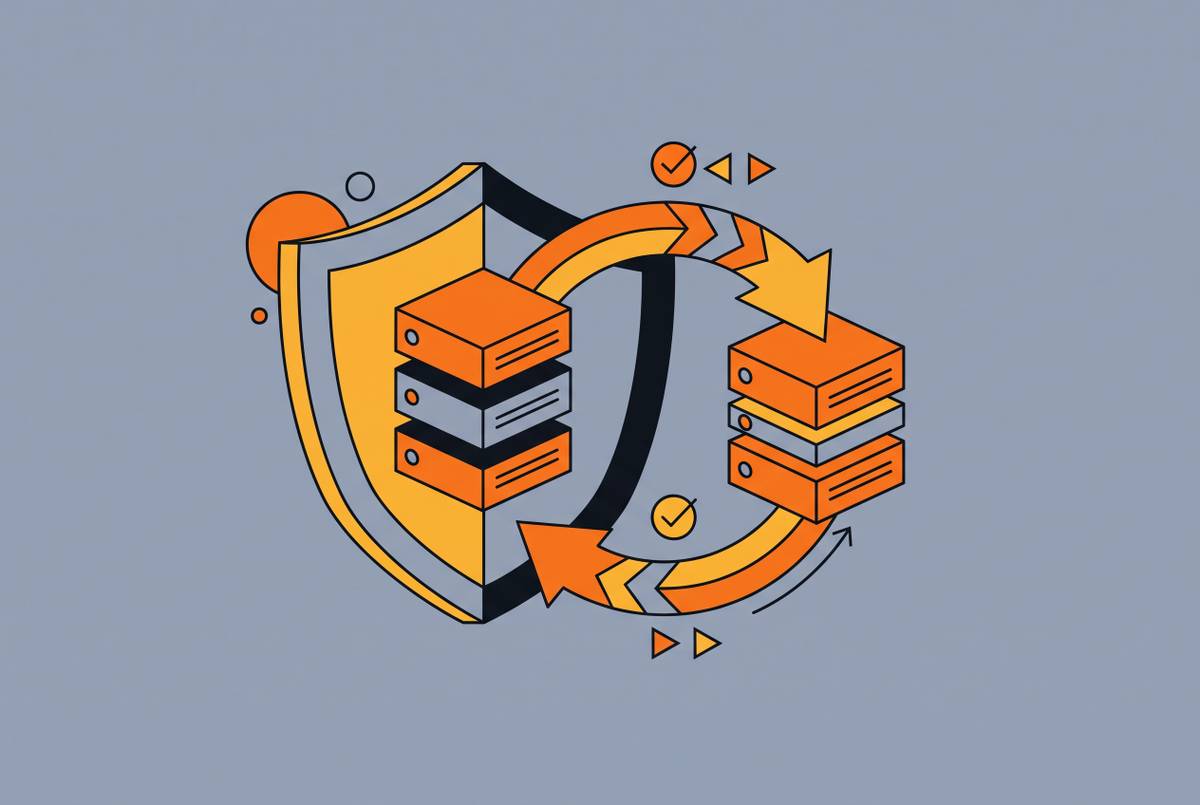
Acronis Cyber Protect Cloud is a multitenant platform built for managed service providers, and its defining feature is architectural: backup, anti-malware, EDR/XDR, patch management, vulnerability assessment, RMM, PSA, and disaster recovery run through a single agent and a single console, natively integrated rather than stitched together from acquired parts. That distinction affects how MSPs evaluate the platform, because the MSP software market is full of suites that bolt separate products behind one login screen. Acronis built the underlying architecture to share one agent across all those functions, which is a different engineering commitment than a shared dashboard.
The platform has a sibling product that MSPs evaluating it should not confuse with the Cloud edition. Acronis True Image 2026, rebranded from Cyber Protect Home Office in mid-2024, serves individual consumers protecting their own devices, while Cyber Protect Cloud is the B2B platform carrying multi-tenant management, compliance reporting, and the advanced security tooling that service providers need to run client accounts at scale. The current version added XDR integration with Microsoft 365 in the February 2025 cloud release (25.02), along with enhanced ransomware rollback and agentless backup for Proxmox VE and Nutanix AHV. The platform supports more than 30 workload platforms officially, backed by data centers in Dallas, Ashburn, Phoenix, St. Louis, and other locations across its global network.
That combination of workload breadth and multi-tenant architecture points toward a particular kind of customer. An MSP running a lean technician bench against a client roster spread across physical servers, virtual machines, cloud workloads, and Microsoft 365 tenants is exactly the shape of business this platform was built to serve, because the alternative, which is stitching together a backup vendor, an EDR vendor, and a patch management tool across every client environment, multiplies the operational burden that Acronis is explicitly designed to collapse.
How the single-agent model reduces operational overhead in practice
The efficiency case for consolidation is not a marketing claim. It appears in how practitioners who manage large client rosters describe their day-to-day workflow. A G2 reviewer in July 2026 described monitoring tenant status, billing, two-factor authentication, backup history, and storage utilization from a single dashboard, and called the process of adding devices and creating protection plans quick and reliable, with measurable time saved daily. That is the consolidation thesis stated in practitioner terms rather than product-sheet language.
TrustRadius reviewers independently describe the platform as a "single pane of glass" spanning both on-premises and cloud workloads, and four out of seven reviewers synthesized in that dataset specifically cited cost savings and improved operational efficiency as outcomes.
Two integration points carry disproportionate weight for MSP workflows, and both hold up well under practitioner scrutiny. Acronis's integrations with PSA and RMM tools including ConnectWise and Datto are described as solid, and the platform lists 36 verified integrations on G2. Backup coverage for Microsoft 365 and Google Workspace, spanning Mailbox, OneDrive, SharePoint, and Teams, integrates cleanly and performs well, which matters given how frequently MSPs touch this workload across client accounts. The multi-tenant console lets service providers manage backup, security, and RMM for large client counts from one interface, the model enabling over 20,000 service providers at the time of the EQT acquisition announcement. None of this means the platform wins every category it touches. The consolidation benefit is documented for the workloads where MSPs spend the most recurring time.
Where the consolidation model hits its ceiling
Covering backup and security fully within one agent creates a ceiling on how deep either discipline can go, and that ceiling is documented rather than speculative. On the security side, a PeerSpot practitioner in February 2025 called for "more mature XDR and EDR features," MSP Compared's independent assessment lists security depth trailing dedicated EDR as a leading con, and a TrustRadius reviewer confirmed that RMM capabilities fall notably short of specialized standalone solutions. These complaints come from three separate review sources pointing at the same gap, not a single disgruntled user.
The backup side carries its own specific limitations. The platform lacks the granular backup and data filtering capabilities that enterprise-grade dedicated backup tools provide, a TrustRadius reviewer flagged agent performance issues tied to multi-core utilization and large SQL databases, and the troubleshooting knowledge base is described as less robust than MSPs need when something goes wrong. Independent testing of the antivirus engine found it detects and blocks malware samples, but at detection rates below dedicated security products such as Bitdefender Business or Malwarebytes for Business. Functional is not the same claim as best-in-class, and the gap between those two is where this platform's ceiling sits.
The clearest illustration of that ceiling is a specific, client-visible failure. A PeerSpot practitioner reported that the antivirus engine was slowing down a client's finance server terribly, a direct operational consequence of running security scanning through the same agent architecture that handles backup. Independent review puts Acronis's enterprise rating at 3 out of 5, and that rating comes with a specific recommendation: organizations running 500 or more endpoints should evaluate dedicated solutions for both backup and security rather than relying on the consolidated platform alone. PeerSpot practitioners have also reported backup corruption events in which backups become inaccessible through Recovery Console, with Acronis support recovery efforts sometimes stretching across months and sometimes failing outright. That failure mode sits at the intersection of product reliability and support responsiveness, and it reappears later in this assessment for exactly that reason.
Pricing structure, cost trajectory, and the transparency problem
Pricing is the most consistently cited pain point across independent review platforms covering Acronis, and the opacity around it complicates the cost planning MSPs need to do before committing to a multi-year platform relationship. Acronis offers three licensing models for Cyber Protect Cloud, service-based per-workload, service-based per-GB, and solution-based licensing, but publishes no public rate card, leaving all pricing to be negotiated through partner channels on request. A recently introduced solution-based model offers three ready-made packages, "Security and RMM," "Backup and DR," and "Ultimate Protection," built to simplify resale without forcing MSPs to construct custom bundles, which addresses part of the configuration complexity criticism the platform has drawn.
That packaging simplification does not resolve the underlying cost trajectory concern. TrustRadius users have reported pricing increases for backup usage severe enough that one described their cost as having nearly doubled. A thread on Acronis's own community forum found that an MSP's annual cost for Cyber Protect Cloud Workstation plus 1 TB of Acronis cloud storage can run meaningfully higher than the equivalent consumer product purchased directly, pointing to a structural margin built into the MSP channel itself. Storage flexibility compounds the cost: users report being required to purchase capacity within Acronis's private cloud rather than routing data to third-party storage providers, a constraint against per-TB alternatives that let MSPs shop storage independently.
MSP Compared's independent scoring gave Acronis its lowest sub-score in the affordability category, noting the platform costs more than license-free and per-TB alternatives. The same assessment credits Acronis for bundling security that standalone backup tools charge for separately, so an MSP comparing Acronis against a backup-only tool has to add a security product's cost to the comparison to make it fair. But the offset only holds as a static comparison. It does not account for a pricing trajectory in which backup usage costs have reportedly climbed toward double their prior level, and it does not change the fact that an MSP cannot get a straight number without going through a sales conversation first.
Support quality and the operational risk it creates for MSPs
Support responsiveness is a separate risk category from product capability, and it has been flagged consistently across independent platforms over multiple years. Capterra reviewers as of March 2026 rate customer service at 3.6 out of 5, the lowest-rated dimension in that dataset, and Software Advice independently rates customer support as its lowest-rated category as well. Two separate review platforms converging on the same weak point indicates a pattern rather than noise from a handful of unhappy users.
Slow support specifically during backup issue scenarios does real damage, because practitioners report that is the moment an MSP can least afford delay, and that diagnostic logs are too basic on their own, often requiring additional tools or outside help to get full visibility into what went wrong. The backup corruption cases documented earlier connect directly to this pattern: when a backup becomes inaccessible and Acronis's own recovery process can take months and sometimes fail, a product reliability problem turns into a client relationship crisis for the MSP caught in the middle. The thinner troubleshooting knowledge base that TrustRadius reviewers flagged compounds the exposure, because MSPs who might otherwise self-resolve a routine issue are instead stuck waiting on a support channel that is already the lowest-rated part of the platform.
The EQT Acquisition and Product Cadence
In 2025, EQT, a Swedish private equity firm headquartered in Stockholm, became Acronis's majority owner, and Ezequiel Steiner subsequently left the CEO role and was replaced by Jan-Jaap Jager. Acronis stated publicly that customers and partners would not be affected by the acquisition, framing EQT's investment as consistent with a strategy that has always put partners first.
The scale at stake gives that governance question real weight. At the time of the acquisition announcement, Acronis served over 20,000 service providers protecting hundreds of thousands of businesses across scores of countries, a customer base large enough to argue for continuity but also large enough to represent exactly the kind of revenue foundation that private equity ownership typically looks to optimize over a holding period. Neither interpretation cancels the other out. Both are true simultaneously, and MSPs should hold them that way rather than picking the comforting one.
The product roadmap since the acquisition argues for continued investment rather than retrenchment. The July 2026 v17 Q2 release added a SIEM connector for exporting security and backup data into SIEM platforms for unified monitoring and audit-ready reporting, and the June 2026 update brought a new Cyber Compliance Service, multistream backup and recovery to cloud storage, cloud validation for backup recoverability, Microsoft Entra ID Backup, VMware Cloud Foundation 9.0 support, and GenAI Protection event investigation. May 2026 brought Acronis Cyber Frame to general availability alongside expanded workflow automation, including cycle functionality, tenant-level workflow management, schedule-based workflows, and partner-level security policy management. Agentless backup for Proxmox VE and Nutanix AHV, added in Version 17, is strategically significant for MSPs managing virtualization environments following Broadcom's VMware pricing changes.
That cadence has not yet translated into stronger competitive standing on every measure. PeerSpot user engagement data shows Acronis Cyber Protect's mindshare in the Cloud Backup category declined meaningfully between the prior measurement period and August 2026, a sign of competitive pressure the feature releases have not reversed. The acquisition and the product cadence tell two different stories that MSPs need to hold at once: active investment in the platform's capability, and an ownership change whose cost implications will not be visible for another year or two of pricing cycles.
Acronis vs. the Alternatives MSPs Most Commonly Evaluate
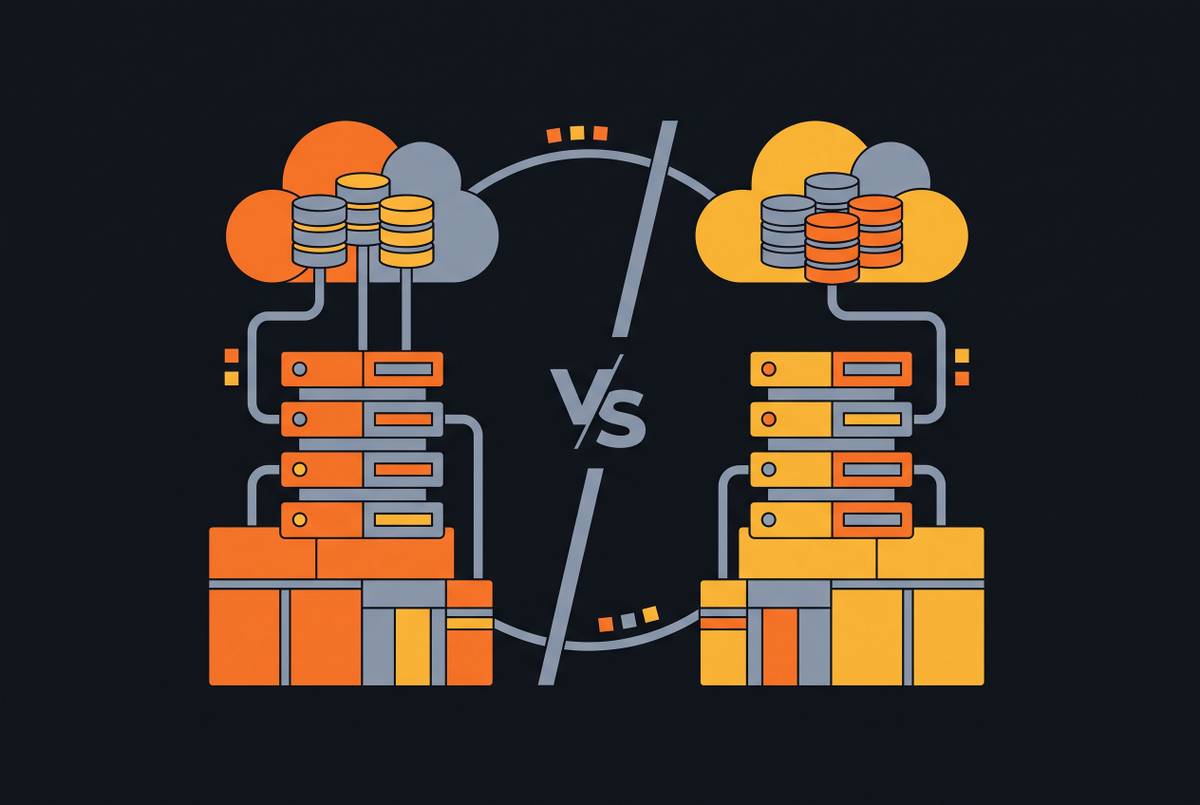
Acronis occupies a middle position in the MSP software market that is defensible but under pressure from both directions: stronger than standalone backup tools on security breadth, weaker than pure-play EDR and dedicated backup specialists on depth, and more expensive than per-TB alternatives once storage costs are added in.
Veeam is the clearest comparison on backup depth. MSP Compared's independent scoring gives Veeam a higher overall score than Acronis, with Veeam particularly strong for organizations prioritizing backup depth across VMs, servers, and cloud workloads. Veeam offers a free tier in addition to a 30-day trial, compared to Acronis's 30-day trial alone, but Veeam does not bundle security, so an MSP comparing total cost of ownership has to add a separate security stack to the Veeam side of the ledger.
MSP360 appeals to MSPs who want per-workload pricing transparency that Acronis's quote-only model doesn't offer, backed by a 15-day trial, though it does not match the breadth of Acronis's security integration. ManageEngine Endpoint Central is listed by Software Advice as a top alternative and rates higher than Acronis on ease of use, value for money, customer support, and functionality, and it publishes a starting per-month price rather than requiring a sales conversation, which is a meaningful advantage for MSPs trying to budget across many client accounts at once.
Standalone backup-only tools such as Synology and Backblaze run on license-free or per-TB pricing models that beat Acronis on storage cost alone, but they leave the MSP to source and manage a separate security stack independently, which is the hidden cost that Acronis's bundled architecture is built to absorb. Set against each of these alternatives, the comparison comes down to the same tradeoff: Acronis wins on consolidation and multi-tenant workflow, and it loses on depth whenever backup or security is the primary requirement and the MSP is willing to manage two vendors instead of one.
MSP profiles that fit Acronis
An MSP managing a broad client roster across mixed workloads, physical servers, virtual machines, cloud infrastructure, and Microsoft 365 tenants, with a lean technician bench and a need to demonstrate consolidated reporting to clients, fits the platform's design intent closely. The operational time savings documented by reviewers accrue most to exactly this kind of generalist MSP running a natively integrated single-agent, single-console platform rather than a bundle of loosely connected tools.
An MSP whose business model depends on deep backup performance for large SQL environments, or one competing primarily on security detection rates against providers running dedicated EDR platforms, is better served by dedicated tools. The documented gaps in multi-core backup performance, antivirus detection rates, and RMM depth matter most to exactly those MSPs, since a single underperforming component in a specialized service line is harder to absorb than it is for a generalist managing varied workloads. An MSP already running 500 or more endpoints should weigh the enterprise-rating guidance directly and evaluate dedicated backup and security tools rather than assume the consolidated platform will scale cleanly past that point. The decision ultimately turns on what each MSP is optimizing for: fewer vendors and lower operational overhead, or maximum depth in the one discipline that defines their service offering.
Sources
- Acronis Cyber Protect Cloud Reviews & Ratings 2026
- Acronis Cyber Protect Cloud Reviews 2026: Details, Pricing, & Features
- Acronis Cyber Protect Cloud
- Acronis Cyber Protect Cloud Software Reviews, Demo & Pricing - 2026
- Acronis Cyber Protect Review 2026: Backup & Security Combined
- Acronis Cyber Protect Review (2026): Features, Pricing & Verdict
- # Acronis Cyber Protect Cloud Software Pricing, Alternatives & More 2026 | Capterra
- Acronis Cyber Protect: Pros and Cons 2026