Datto vs Veeam for MSP Backup Deployments
Datto's bundled simplicity faces growing lock-in risks under Kaseya ownership.
Choosing between Datto and Veeam comes down to operational model, and that model determines margin structure, not just technical capability. An MSP does not run one client's IT environment the way an internal IT department runs one company's. It runs dozens or hundreds of them at once, and standardization is what separates a shop that makes money from one that drowns in bespoke engineering for every site. That single fact shapes everything about how an MSP should think about backup and disaster recovery tooling.
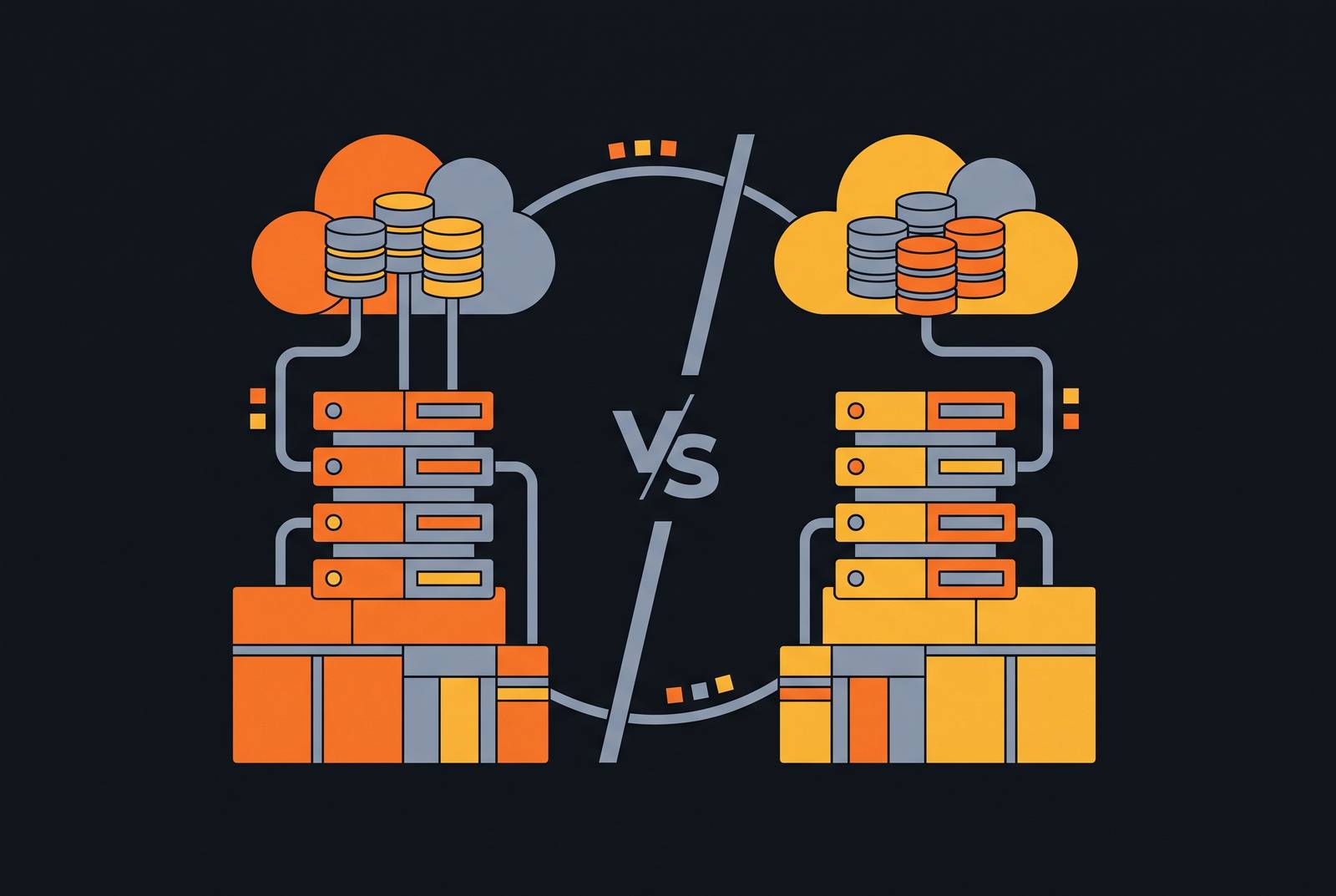
The market has produced two coherent answers to this problem, and they sit at opposite ends of the same spectrum. Datto SIRIS bundles hardware, software, cloud replication, and centralized management into one commercial package that an MSP buys as a unit. Veeam takes the opposite approach: it separates those layers, software from infrastructure from cloud storage, and leaves the MSP to assemble the stack it needs. Neither approach is wrong. Each reflects a different theory about where an MSP's labor goes and where its margin actually comes from.
The rest of this piece works through both models on their own terms: what each delivers, what each costs, and where the tradeoffs land differently depending on an MSP's size and client mix. Nothing about that comparison resolves in a single winner.
Datto SIRIS: Delivery and Cost
Datto SIRIS delivers real operational simplicity, and that simplicity comes at the cost of three layers of lock-in that compound on each other over time.
SIRIS appliances take image-based backups at intervals as short as every five minutes, replicate them automatically to Datto's cloud, and support instant virtualization, either locally on the appliance or in Datto's cloud, so a failed server can be running again from backup within minutes. Retention can be set down to five-minute increments, with the option of infinite cloud-based retention, and the Datto Portal gives a centralized view across all client sites. Practically, that means the path from backup to recovery is something a technician can rehearse once and repeat identically across every client, without reinventing the process site by site.
That consistency is Datto's real value proposition to an MSP: not the fastest possible recovery time on paper, but a recovery workflow that scales without custom engineering.
The cost structure follows the hardware. SIRIS appliances carry a real upfront hardware price, and monthly cloud fees stack a recurring per-device charge on top of that. Billing itself changed in December 2025, when Kaseya retired High Watermark billing, the model that charged MSPs for peak storage usage even after a client had deleted the underlying data, and replaced it with a Committed Minimum Quantity and Variable Consumption model. A roughly 10% price cut had already been announced separately, back at the close of Kaseya's 2022 acquisition of Datto. Even with that reform in place, the combined cost of appliance hardware plus cloud fees still runs higher than building a comparable backup and disaster recovery stack around Veeam and commodity hardware.
Three layers of lock-in produce that pricing. The backup format is also proprietary, so restoring data to AWS, Azure, or GCP requires routing through Datto's own cloud, and that detour adds friction and fees that rarely appear in the initial sales conversation. And the lock-in compounds across the wider Kaseya product line: the more of that ecosystem an MSP adopts, Autotask, IT Glue, VSA, the harder it becomes to walk away from any single piece of it.
What the Kaseya acquisition changed about Datto's risk profile for MSPs
The Kaseya acquisition of Datto converted its MSP-first simplicity into an ecosystem-concentration risk, and the post-acquisition track record has given MSPs legitimate reasons for skepticism that no amount of product polish can fully resolve.
The deal was large by any standard in this market. Kaseya acquired Datto for $6.2 billion in 2022, and the reaction across the MSP community was sharply negative, driven largely by concern over Kaseya's pattern of locking customers into multi-year contracts. Datto's own founder, Austin McChord, captured the mood at the time with a line that has stuck in the industry's memory: "It feels like you just bought a leading football team and are in the process of breaking all the players' legs."
That skepticism has not simply faded with time. Kaseya laid off a substantial number of employees in January 2026, a move that reflects years of integrating duplicate sales teams, support organizations, and back-office functions from the Datto merger finally coming due. For MSPs, a vendor in ongoing restructuring means support quality and roadmap continuity are genuinely uncertain.
The product roadmap has shifted in a parallel direction. Post-acquisition, Datto's development path increasingly blends into Kaseya VSA and the wider Kaseya 365 bundle, an arrangement that works well for MSPs already committed to an all-in Kaseya stack but complicates life for shops that want a focused, standalone BCDR tool. Feature requests that once had a clear path forward under an independent Datto now compete with the priorities of the broader bundle.
Sentiment data reflects this tension concretely. Among 40 MSP tools tracked, three products are in declining sentiment: ConnectWise PSA, Kaseya VSA, and Datto RMM, all three from the two dominant market consolidators. Insurance underwriters have picked up on the same dynamic from a different angle: cyber insurance renewals now include explicit questions about vendor concentration, which adds a cost dimension to bundling that didn't exist a few years ago.
None of this erases the concessions Kaseya has made. The December 2025 billing reform was a real, substantive change. But it arrived only after years of sustained MSP backlash, and that timeline itself is a credibility problem that a single billing fix doesn't resolve. Multiple MSPs report that renewal pricing has crept back upward wherever bundling is involved, and that the "savings" offered often arrive tied to longer contract terms. The billing model changed. The underlying incentive to bundle and to lock in, the thing that made MSPs distrustful in the first place, has not changed nearly as much.
Veeam's Architecture for MSPs
Veeam's breadth of workload support and its open, unbundled infrastructure model make a genuinely strong case for MSPs managing complex, varied client environments, though the historic need to self-host that infrastructure made the platform expensive to run at smaller scale.
Veeam protects physical servers, virtual machines, cloud workloads, NAS devices, Microsoft 365, and Kubernetes environments, giving it the broadest workload coverage in the MSP backup market. The Veeam Universal License is portable across workload types, whether virtual, physical, or cloud, giving MSPs flexibility to protect heterogeneous client environments without separate licensing tracks. Since version 11, the platform has added Instant VM Recovery, Continuous Data Protection, automated backup verification through SureBackup, and immutable repositories. That combination has translated into real market standing: PeerSpot's Cloud Backup Report puts Veeam Data Platform's share of mindshare in the cloud backup category at 6.5%, well above Datto Cloud Continuity's fraction of that figure.
The friction has always sat on the infrastructure side. Because Veeam's core model is software-only, MSPs had to supply and maintain their own servers, storage, networking, and monitoring to run it, and once power, hardware, and engineer hours were factored in, the real total cost of ownership ran two to three times the license fee alone. Below a certain client and seat count, that overhead compresses margins badly enough that Datto's bundled, higher-sticker-price model starts to look like the more rational purchase. Veeam also ships with no RMM and no PSA of its own, so MSPs have to pair it with separate tooling, which reintroduces exactly the kind of integration complexity that Datto's bundle is designed to eliminate. Pricing adds a further layer of difficulty at the sales stage: MSP rental SKU pricing for Veeam is not published, and Veeam Data Platform pricing is quote-only, making early cost modeling for a prospective client noticeably harder than pricing out a Datto appliance.
What Veeam Data Cloud and VSPC v9 Change
The launch of Veeam Data Cloud for MSPs alongside Veeam Service Provider Console v9 removed the single biggest operational barrier that had kept smaller MSPs away from the Veeam model: the requirement to host the infrastructure themselves.
Veeam Data Cloud for MSPs went live on 15 October 2025 together with VSPC v9, marking the first time Veeam has offered a properly multi-tenant service that Veeam itself operates, rather than software that has to be run on its own hardware. VSPC v9 also cuts infrastructure overhead directly by making Veeam Cloud Connect dependencies for tenant management optional, letting MSPs manage tenants, workloads, and agents straight from the Console. A new API Control Center consolidates automation, security enforcement, and management of Microsoft 365 and public cloud backups into one place across the entire tenant estate. Together, these changes bring multi-tenant, multi-workload management into a single interface and close the operational gaps that used to sit between different customer environments.
The effect on the margin math is direct. Removing the self-hosted infrastructure requirement removes the two-to-three-times multiplier on license cost that used to make Veeam uneconomical below a certain scale. MSPs can now sell managed backup built on Veeam's own infrastructure without the capital outlay and engineer hours that used to be a precondition, and that shifts the break-even point for smaller shops considerably.
Veeam also expanded its platform in a different direction the same month: it announced the acquisition of Securiti AI in October 2025, completed the deal in December 2025 for $1.725 billion, and added data-security posture management to its offering, a category Datto does not currently compete in.
What hasn't changed is price direction and the tooling gap. Veeam raised prices again in January 2026, at least the third year in a row it has done so, and MSPs building multi-year budgets around VUL licensing should plan for continued upward pressure rather than assume the current rate holds. The platform still ships without native RMM or PSA, so pairing it with separate tools still demands extra setup and maintenance work, even though hosting is no longer the obstacle.
SaaS Backup Storage Architecture: Veeam Data Cloud vs. Datto SaaS Protection
Where the backup copy actually lives relative to the production SaaS vendor's own infrastructure is a compliance and risk question, and Veeam Data Cloud and Datto SaaS Protection answer it in different ways.
The starting point for that question is that native retention inside a SaaS platform was never designed to function as backup. Microsoft and Google both document that their retention policies, litigation holds, and recycle bins exist to serve their own operational needs, not to meet a customer's recovery point objectives after a malicious insider deletes data or a misconfigured automation flow wipes out a folder tree. That gap is why third-party SaaS backup exists as a category in the first place.
Veeam Data Cloud stores Microsoft 365 backups in Azure Blob Storage, within a region the customer selects, which is a genuine step away from keeping the backup copy inside the M365 tenant itself. It remains hosted on the same hyperscaler whose services it is protecting. Immutability on that data is enforced through Azure Blob immutability policies, a configuration-based protection rather than a structurally separate one, and Veeam applies a Fair Use policy governing usage under heavy load. Coverage under Veeam Data Cloud currently spans four workloads: Microsoft 365, Entra ID, Salesforce, and Azure IaaS and PaaS, with no Google Workspace support. Pricing for the Foundation tier runs around $2.63 per user per month for M365-only coverage, with the Premium tier priced meaningfully higher, based on third-party comparisons.
That architectural choice, backup data stored on the same cloud platform it protects against, is the detail an MSP evaluating SaaS backup for a regulated or risk-sensitive client needs to weigh directly against how Datto's own SaaS Protection product handles the same question, since the two vendors are not solving for storage location in the same way.
Sources
- Datto Cloud Continuity vs MSP360 Backup vs Veeam Data Platform (2026)
- MSP Backup Solutions Compared (2026) - Flamingo
- Best Datto Alternatives for MSPs in 2026: BCDR, RMM, and PSA
- SaaS Backup Compared 2026: Keepit vs. Veeam Data Cloud vs. Datto
- 9 Datto Alternatives for MSPs, Compared (2026)
- Datto SaaS Protection for Microsoft 365