Failover vs Fallback in Production Disaster Recovery
Failover handles emergencies, but failback can corrupt data if you skip the hard parts.
Failover and failback get treated as a matched pair, two halves of the same switch. They aren't. Failover is a reaction to a crisis; failback is a deliberate, planned return, and the two operations carry entirely different risks, triggers, and failure modes. A disaster recovery plan that treats them as mirror images will handle the emergency fine and then damage production data on the way back to normal.
What failover does, step by step
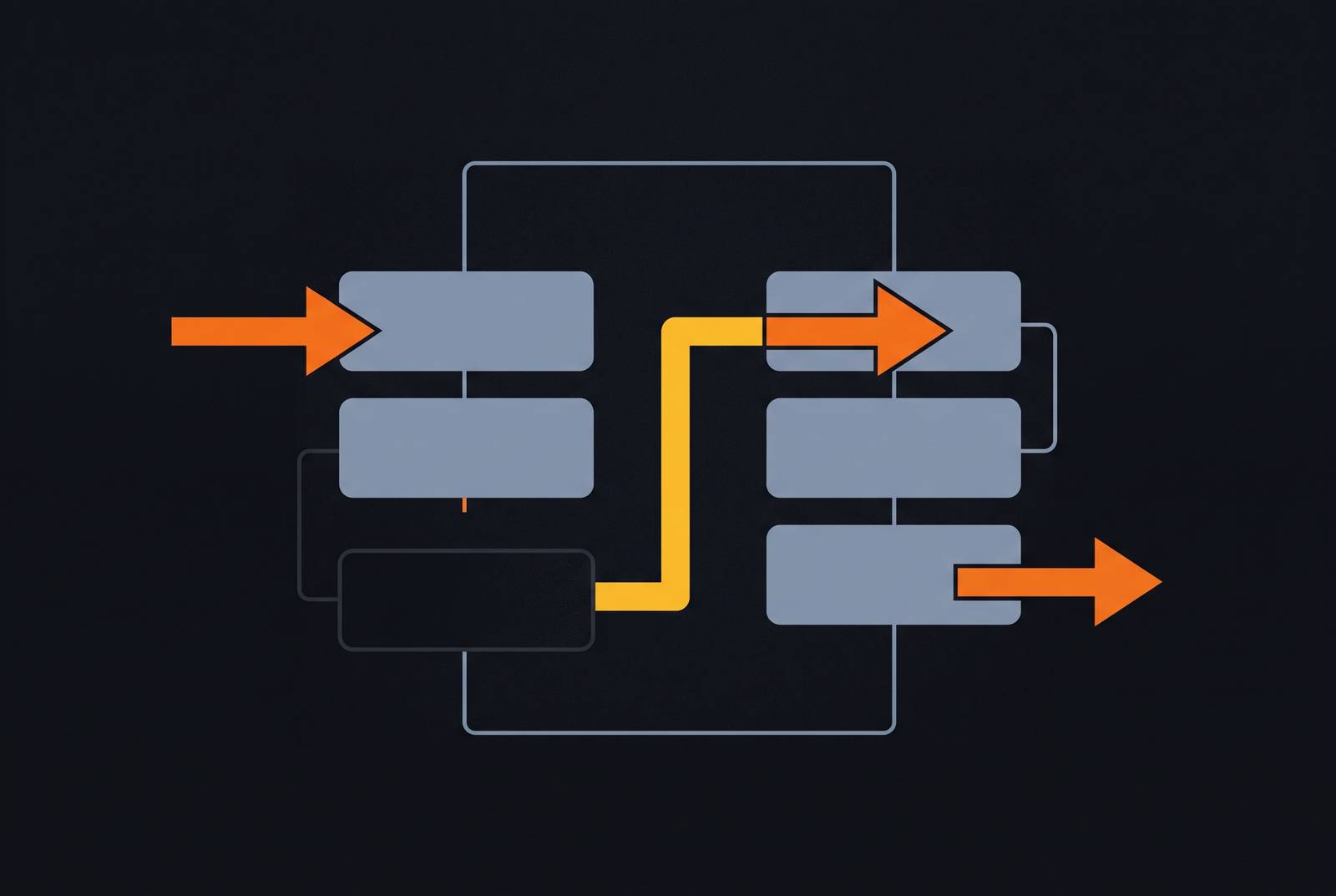
Failover looks simple from the outside: primary goes down, backup takes over. In practice it's a sequence with distinct steps, and each one can fail independently. Monitoring has to detect the degradation first: a dead health check, a spike in error rates, or a hardware fault can each signal it. Then a trigger fires, automatic or manual, and traffic redirects toward the standby. The final step, validation, is the one teams skip under pressure: confirming that applications are functioning correctly on the secondary environment, and confirming that they're reachable is not enough.
The architecture behind the standby determines how much of the failover and failback process runs automatically versus requiring manual steps. Active-active setups run traffic across multiple nodes simultaneously, so there's no distinct switchover moment to manage. That's the right call for mission-critical workloads where even a few seconds of downtime is unacceptable, but it costs more and demands more operational discipline to keep every node consistent. Active-passive, or active-standby, is the more common pattern: the standby sits idle until called on. It's simpler to run, but recovery speed depends entirely on how fast that idle system can spin up, and idle capacity isn't free just because it isn't serving traffic.
Stateful applications complicate all of this. A stateless service can fail over quickly because there's nothing to reconcile. A database, or a stateful application with persistent storage carries state that has to move or replicate correctly, and getting that wrong is how teams end up with two systems that both think they're authoritative. Dedicated DR automation tools can automate a lot of the detection and initiation work, and automatic triggers cut response time meaningfully. They also introduce false positives as a real design tradeoff, not a flaw to dismiss: a network blip that looks like an outage can trigger a failover nobody needed.
The architectural choice made here doesn't just shape failover. It sets the difficulty of the return trip. The more complex the standby setup, the harder failback becomes, and that connection is easy to miss until it's the thing costing hours.
The four-stage recovery loop: how failover and failback connect in practice
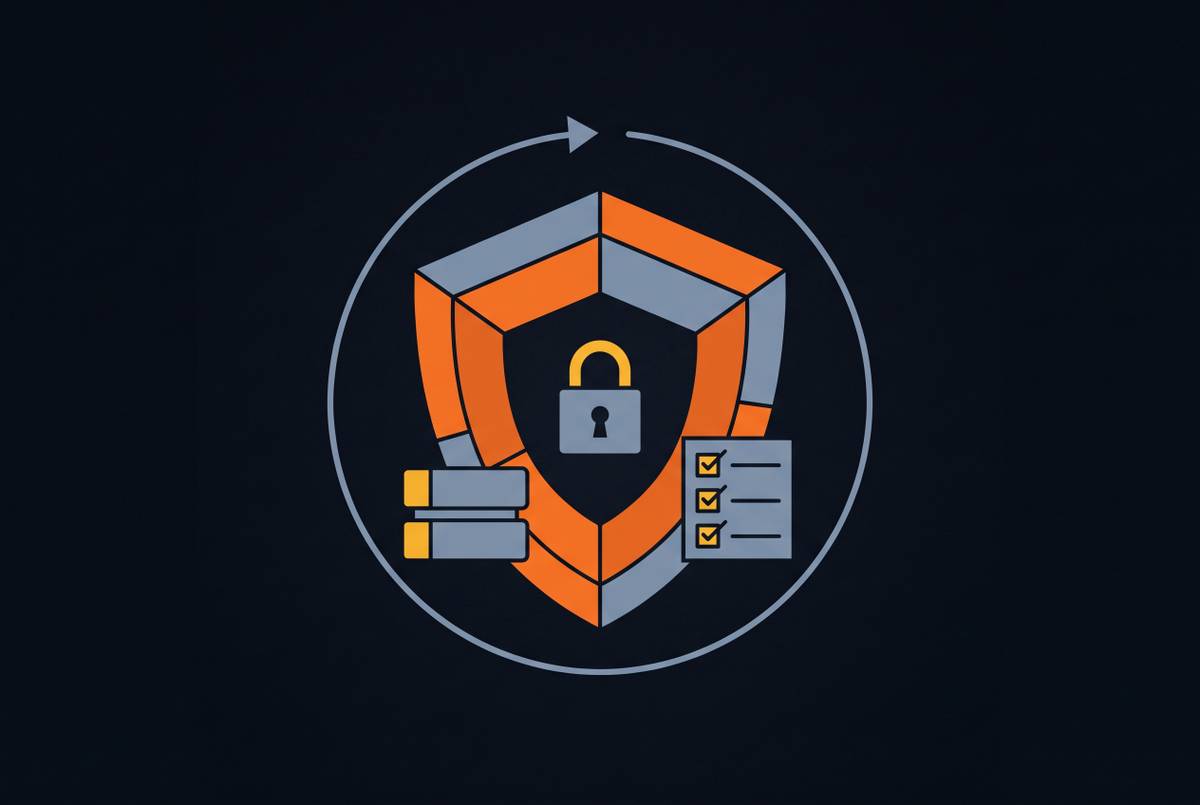
Azure Site Recovery documents a four-stage model that makes the full loop concrete, and it applies conceptually well beyond that one product. Machines fail over to Azure in stage one, and Azure VMs get created from replicated data. In stage two, reprotection kicks in as those new Azure VMs start replicating back to the on-premises site, and the original on-premises VM, if it's still reachable, gets turned off to keep data consistent. Stage three is the failover from Azure back to on-premises, once that site is restored, targeting either the original location or an alternate one. Stage four reprotects the on-premises machines by re-enabling replication to Azure, which closes the loop.
That fourth stage is the one that gets skipped in practice, and it's the one that matters most. Failback is itself a failover, just running in the opposite direction, with its own recovery point selection and its own commit step. Azure Site Recovery treats failover as a two-phase activity: the failover that creates and brings up the VM, followed by a commit. Once that commit happens, the recovery point can't be changed. That's a deliberate checkpoint, and it illustrates why sequencing must be followed correctly before speed: committing to the wrong recovery point locks it in, since the recovery point can't be changed once that commit happens.
Teams that declare victory the moment users are back on the primary system have left themselves exposed. The loop isn't done until replication is re-established and the DR posture is fully restored. "We're back on primary" is not the same claim as "we're protected again," and conflating the two leaves a team with no working standby when the next outage hits.
Why failback is where data integrity breaks down
A bad failover causes downtime, and that's the asymmetry that matters most. A bad failback can corrupt production data. In most operational contexts, that's the worse outcome by a wide margin. Downtime is visible and recoverable. Corrupted or forked data is neither.
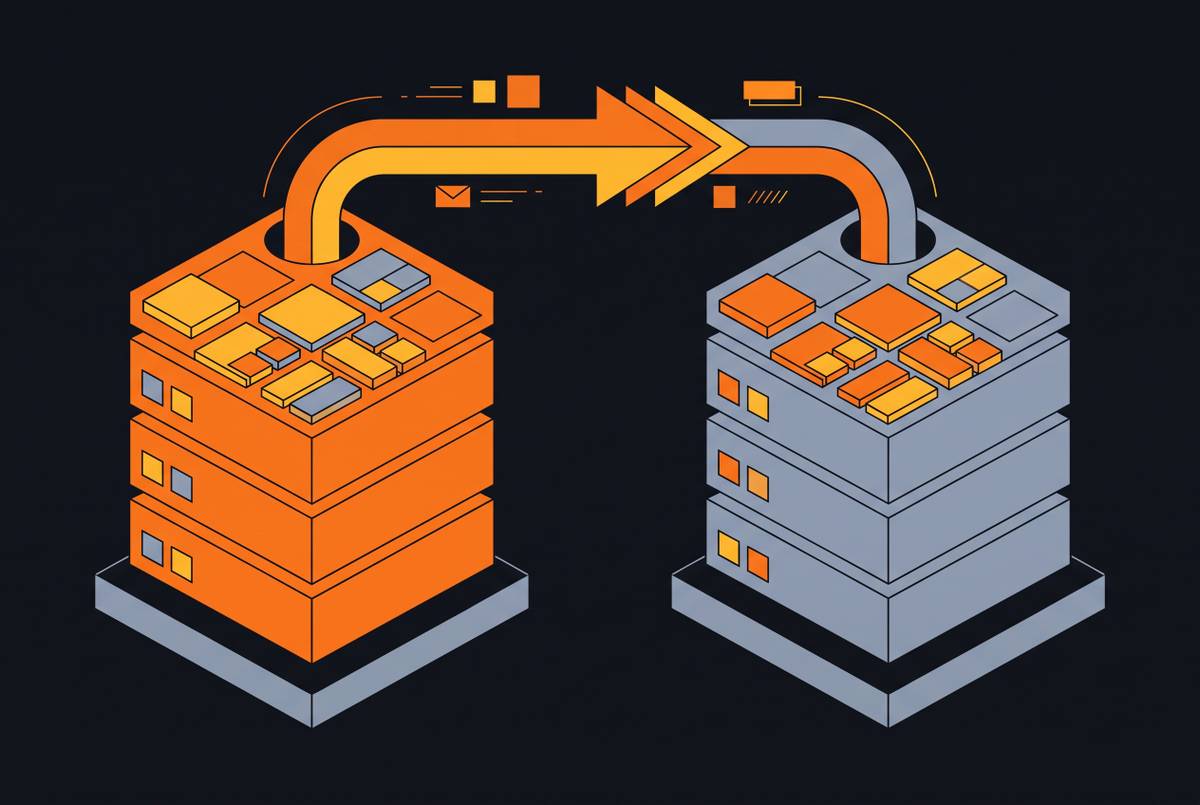
The reason failback is so much riskier is structural. Once failover completes, the secondary system stops being a backup. It becomes the source of truth. It accepts writes, processes transactions, accumulates state that never existed on the original primary. Every order placed, every record updated, every session created during the outage now lives only on that secondary system. Simply flipping DNS back and bringing the original primary online, without accounting for any of that accumulated change, discards it, or worse, forks it into two diverging histories that never reconcile cleanly.
Changes made during the failover period diverge from the original system state, and this divergence has a specific shape. Changes made during the failover period get saved as change data on the recovery system. Only that interim, altered data should return to the primary. A full system copy back to the original would overwrite the very changes the standby was created to preserve, defeating the purpose of having failed over. Synchronization has to happen before traffic moves back, never after, and incremental sync (moving only the change data rather than replicating the whole environment again) is both faster and more reliable than a full re-copy.
There's a predictable pressure point here. Running a secondary environment in the cloud costs money on top of whatever the primary already costs, and teams feel real urgency to shut that down and rush the return. That urgency is a false economy the moment data preservation is actually the priority, which it always is. Failback deserves treatment as a new migration in its own right: its own recovery objectives, its own change-control approval, its own rollback boundary. It is not the last line item on the failover runbook.
How RTO and RPO govern both directions of recovery
RTO, recovery time objective, is the maximum acceptable time a system can stay down before normal operations have to resume. RPO, recovery point objective, is the maximum acceptable data loss, measured in time, and it's what determines how frequently backups or replication need to capture state. Neither number is abstract. They dictate the actual engineering of the DR system.
Real-time replication compresses both figures dramatically compared to restoring from periodic backups, and the gap between the two approaches isn't marginal, it's qualitative: far less data loss and far less downtime versus a full restore cycle. A standard approach to tiered DR planning assigns targets by workload criticality. Mission-critical workloads demand the tightest targets, which in practice requires active-active or multi-region deployment. More tolerant workloads can accept longer recovery windows and are commonly served by active-passive with a warm or cold standby. Non-critical systems, where extended downtime is genuinely acceptable, are often well served by plain backup and restore as the sensible, cost-effective choice.
The tradeoff running through all four tiers is the same: tighter RTO and RPO targets mean higher infrastructure cost and more operational overhead, and there's no tier at the top where that stops being true. Getting close to zero on both metrics requires several capabilities working together: fast recovery mechanisms that minimize restore time, continuous or near-continuous data protection that captures changes frequently rather than on a schedule, DR orchestration that automates both the failover and the testing of it, and reliable backup integrity that guarantees a clean recovery point.
What gets missed constantly is that these metrics need to govern failback with the same rigor. Teams define RTO and RPO for the failover event and then leave the return trip unmeasured. As a result, failback has no enforceable standard. If nobody set a target, nobody can say the return took too long or lost too much.
Choosing a DR pattern before you need it
Four patterns cover most of the ground, and they sit at different points on a cost-versus-speed curve. Backup and restore is the cheapest and slowest, appropriate for non-critical workloads where an RTO measured in hours or days is genuinely fine. Pilot light keeps minimal infrastructure running in standby, scaled up only when activated, a reasonable middle ground for teams that don't want to pay for idle capacity but still want faster recovery than a cold restore. Warm standby runs a scaled-down but fully functional version of the production environment continuously, ready to be promoted, and activates faster than pilot light because there's less to spin up. Active-active distributes full production load across regions or nodes and gets closest to zero downtime, at the highest cost and the most operational complexity.
The pattern chosen doesn't just shape failover, it shapes what failback even means. An active-active environment has no clean primary-secondary boundary to restore to, since every node is already live. Failback in that context isn't a return trip, it's a rebalancing exercise, and treating it like a classic failback runbook is a category error.
Shared dependencies are the vulnerability that a good pattern can't paper over on its own. A DR plan is only as strong as its weakest linked component, and a workload that leans on a shared service or a third-party resource without its own failover strategy creates a gap no amount of primary-side planning closes. The same goes for containerized environments: Kubernetes and similar orchestration tools make redeploying stateless services close to trivial, but stateful workloads with persistent volumes still need dedicated handling, and the DR pattern has to account for both kinds of workload living in the same cluster.
Where the infrastructure lives changes the mechanics too. Cloud environments enable failover through automated scaling and geographic distribution that's largely built into the platform. On-premises deployments need pre-provisioned standby hardware sitting there, waiting, which is its own cost commitment. Hybrid architectures blend the two, often failing critical workloads over to cloud while keeping sensitive data on-premises for regulatory or contractual reasons.
Testing failover and failback as a continuous practice, not a one-time event
Failover testing and full DR testing get used interchangeably, and they shouldn't be. Failover testing checks one thing: can the system switch to the backup environment during a disruption. DR testing is the broader exercise, covering backups, personnel readiness, data integrity, and long-term continuity, and a failover test alone can't stand in for it. A well-built DR test always includes failover testing as one component inside a larger exercise, never as a replacement for it.
DR testing deserves the same treatment as a release pipeline: frequent, incremental, and measured, run regularly rather than as a ceremonial fire drill once a year to satisfy an audit checklist. Every test should produce actual evidence of what worked, what didn't, and what was corrected in the runbook as a result. A reasonable cadence runs restore tests regularly, covering database and storage restores into an isolated environment, and a full or partial failover drill periodically, with real traffic cutover and validation of application behavior on the standby.
Most teams, when pushed, can execute a failover successfully. Failback is where things fall apart, because data divergence and change control get tested under real conditions for the first time, often during an actual incident rather than a drill. The practical lesson: plan and test failback before ever running a real failover. Finding the gaps in a controlled drill costs a few hours. Finding them mid-disaster costs a lot more, and sometimes it costs data that doesn't come back.
Azure Site Recovery, for what it's worth, supports test failovers run against a copy of the VM with zero impact on ongoing replication or the production environment, which is a non-disruptive way to validate without putting anything real at risk.
A practical failback checklist for teams planning their DR runbook
Confirm the root cause is actually resolved before starting failback: hardware replaced, patches applied, the security threat contained, and the primary environment passing health checks on its own terms. "The site is back online" is not the same statement as "the primary is safe to receive traffic again," and treating them as equivalent is how failback starts too early.
Resynchronize data before redirecting a single user. Replicate the change data accumulated on the secondary back to the primary, and make sure only that interim, altered data transfers, not a full overwrite of the primary from a stale image. For large datasets or stateful applications, this step eats the most time in the whole process, and rushing it is where the real damage happens.
Run consistency checks on the data before cutover. Skipping this causes split-brain data states, where two systems each hold a version of the truth and neither can be trusted without manual reconciliation.
Stage the traffic return instead of redirecting every user at once. A gradual cutover gives the team room to catch a problem while it's still affecting only a fraction of users.
Set a rollback boundary ahead of time. If something breaks mid-failback, the team needs a pre-agreed point at which it reverts back to the secondary rather than pushing forward and hoping it resolves itself.
Document the approvals and change-control steps as part of the runbook itself. Failback is a planned migration, not an emergency response, and it should move through the same governance any planned migration would.
Re-establish replication the moment failback completes. The DR posture isn't restored until the primary is replicating to the secondary again, and stage four of the recovery loop covers that step; skipping it leaves the system unprotected against the next incident.
Finally, capture the actual failback duration and the data state at handoff. That evidence is what feeds the next round of RTO and RPO reviews, and without it, those targets stay theoretical rather than tested.